
the ignore test
The 3 questions to stress test your brand positioning, copy and campaigns

Even the biggest brands get it wrong. Big data, even bigger budgets and army of ad agencies won’t save you from becoming wallpaper if your messaging doesn’t matter.
The good news is that their expensive mistakes are our free lessons.
To stop this from happening to my clients, I’ve developed a brutal little framework called The Ignore Test.
Three simple questions:
- Can I see it?
- Can I prove it?
- Could this only come from them?
Let’s look at two real-world UK campaigns to see exactly how it works:
Exhibit A: The Open University
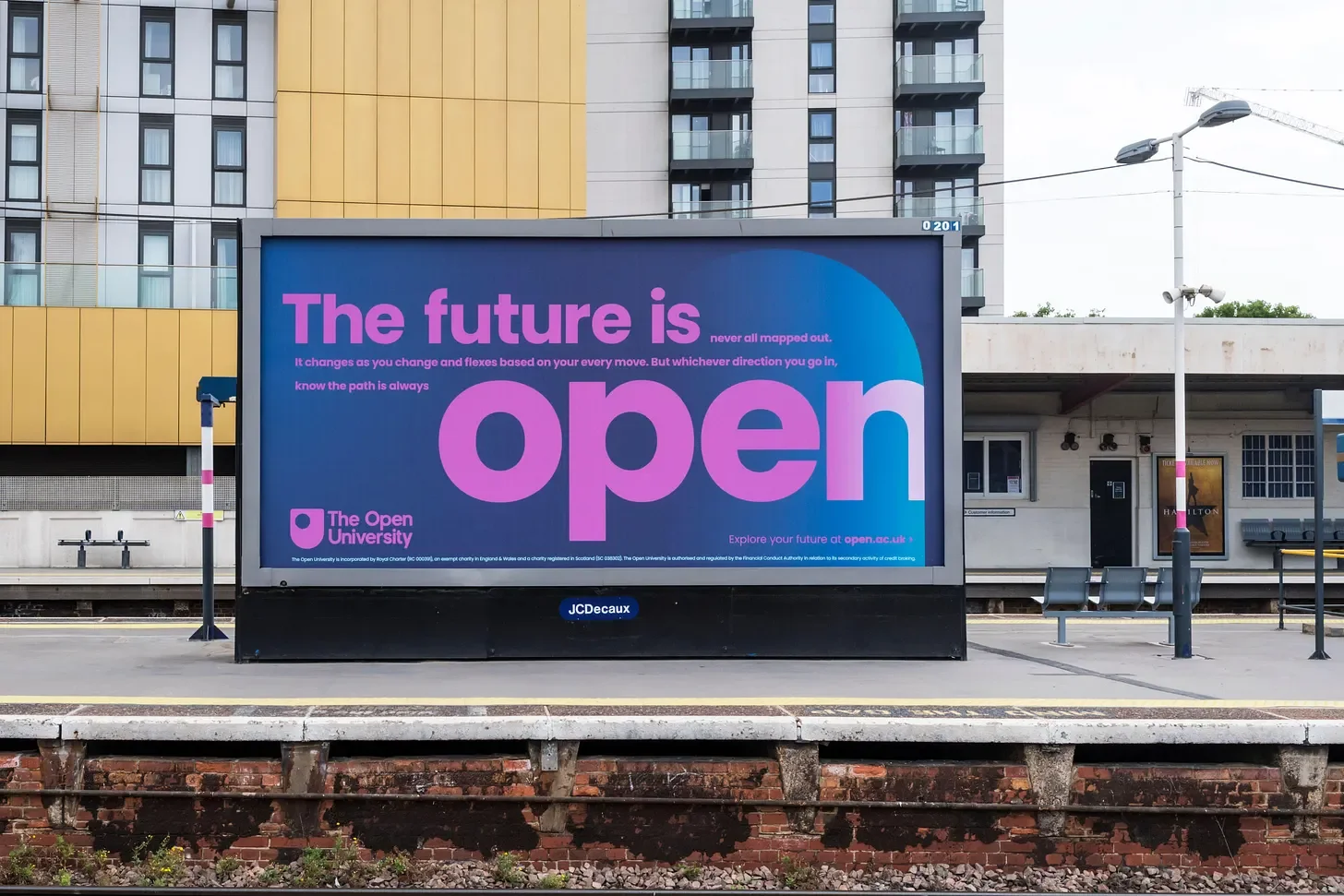
Headline:“The future is never all mapped out.”
And if you squint really hard:“It changes as you change and flexes based on your every move. But whichever direction you go in, know the path is always open.”
OK, let’s score it:
Can I see it?NO.
The copy is trapped in abstract concept territory. A tired commuter cannot physically visualise a “future changing and flexing”. What even is that? What DOES the path look like? There’s no scene, person, example skill, trade or qualification, outcome, identity for us to hook into. Just visual fog.
Can I prove it?NO.
When there’s nothing to see, there’s little to judge. Without specificity of data or story of career outcome; any notion of a hard metric, we cannot test it, verify it or call bullshit. It just floats away.
Could this only come from them?NO.
This is the ultimate interchangeability trap. Cover the logo. This exact line could belong to an insurance company, high-street bank, recruitment agency, or meditation app.
[*The Open University is a phenomenal institution that changes lives. But in this moment, the quality of their education doesn’t matter because the message is invisible.]
Verdict: Wallpaper.
Score: 0/3
Exhibit B: SURREAL Cereal
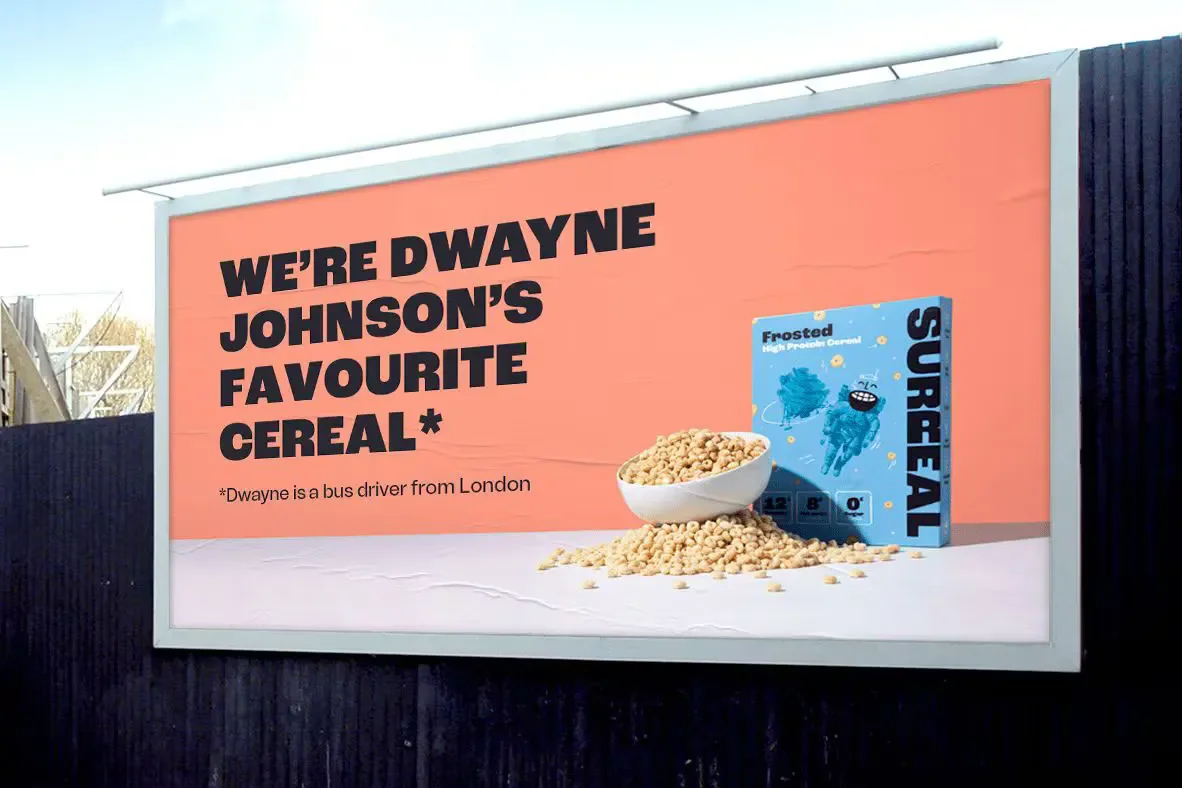
The headline:
“We’re Dwayne Johnson’s favourite cereal.”
The reveal:
“Dwayne is a bus driver from London.”
Let’s score it:
Can I see it?YES.
It forces the brain to picture a highly specific, funny real-world scenario. First you see The Rock. Then you see a London bus driver called Dwayne eating cereal. Borrowing from celebrity, anchored in the everyday.
Can I prove it?YES.
The claim gives the brain a tangible handle to judge. We can laugh that The Rock might, but more importantly have every reason to believe Dwayne does. Which is the point. The line gives us enough specificity to believe it, test it or call bullshit (with little reason to do so).
Could this only come from them?YES.
A Kellogg’s or Nestlé would struggle to use cheeky legal loopholes or self-deprecating humour. SURREAL can say it as the underdog and get away with it in the name of disruption. The line has fingerprints.
Verdict: Hard to ignore.
Score: 3/3
The Three Forces of The Ignore Test
When you analyse your own brand, positioning, offers, or content, flip the pronoun and ask:
Can they see it?Measures reality.If they can’t see it, it doesn’t feel real.
Can they prove it?Measures specificity.If they can’t prove it, it doesn’t feel true.
Could this only come from you?Measures preference.If anyone could logo it, you’re an option not the chosen one.
If you’re running a genuinely good service, you can’t afford to hide behind abstract fluff like “helping ambitious leaders unlock their potential” or “driving strategic growth.”
It might be sound like LinkedIn speak… but it conjures little or no specificity or certainty and makes you entirely interchangeable.
I hope this was useful. If you’d like my help to run The Ignore Test on your business, let’s chat - you can book a FREE 20 min call here.